


Ultimate 11
4.84.00 Reviews
App Specs
- Version
- 1.8.0
- Updated On
- License
- Free
- Downloads
- 10,000+
- Developer
- Vaulty Studios Inc.
- Categories
- Sports
- Platform
- Android
Screenshots
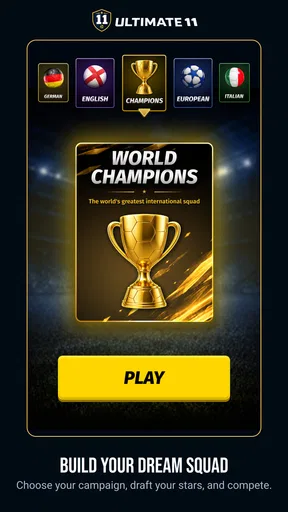
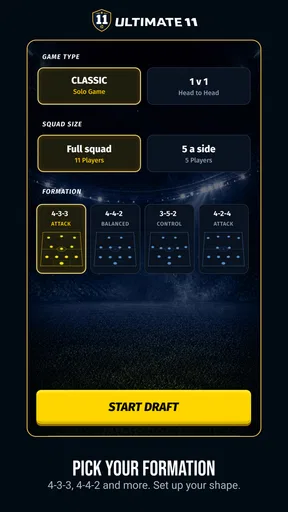
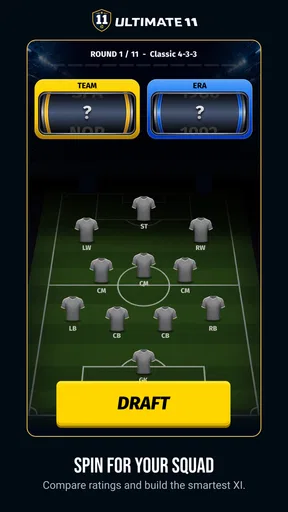
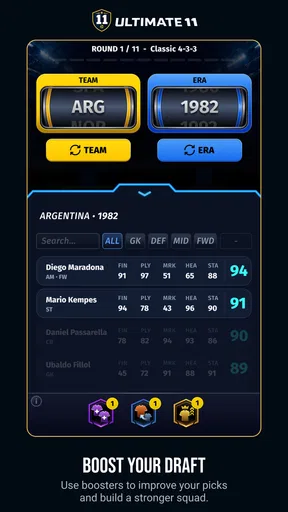
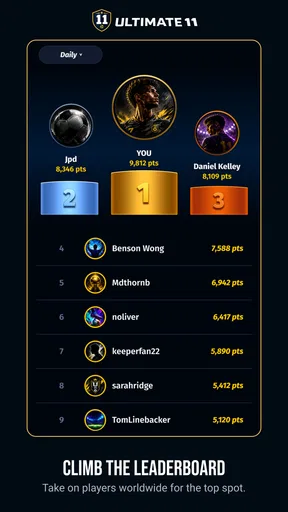
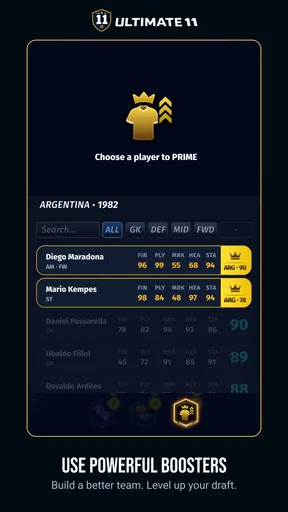
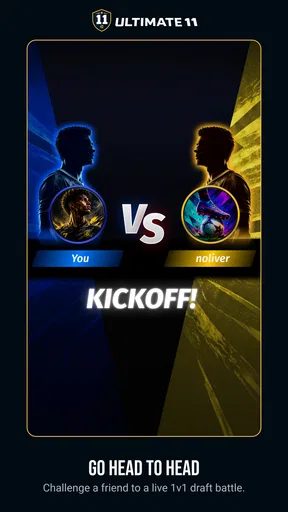
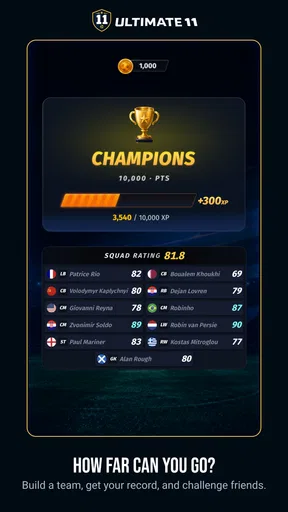
 Analysis by AppCompare
I went into Ultimate 11 expecting a quick football game built around choosing famous players, but its real appeal is more focused: it turns team selection into the main event. You are not simply controlling a match from kickoff to the final whistle. You are trying to assemble a convincing eleven, balance the roles on the pitch, and make the kind of choices that separate a memorable squad from a collection of big names.
That makes it an interesting sports game for short sessions. I can imagine opening it while waiting for a bus, making a few changes to my lineup, and closing it again without feeling that I abandoned a long campaign. At the same time, anyone looking for a full football simulation should understand the distinction immediately. This is centered on the fantasy of building an Ultimate XI, not on reproducing every part of a professional football season.
How Ultimate 11 feels in its current form
The game comes from Vaulty Studios Inc. and is available as a free sports title for Android. Its audience is broad, with an Everyone content rating, and it can run on devices using Android 7.0 or later. That older minimum requirement is useful for players with phones that are no longer near the top of the market, although actual comfort will still depend on the device and how demanding a particular session becomes.
The first thing I noticed is how strongly the concept guides the experience. The short description, “Ultimate 11,” is minimal, but the longer store message makes the intended loop clear: draft football legends, shape a best-ever team, and pursue the trophy. I would not install this expecting a conventional league manager with endless administrative screens. I would install it because I enjoy debating whether one legendary attacker fits my formation better than another.
That narrow focus is a strength when I want something immediately understandable. There is no need to learn a complicated control scheme before I can start thinking about my squad. The trade-off is that people who enjoy detailed transfers, training schedules, tactical sliders, or realistic match management may find the experience lighter than they hoped. The game’s identity depends on whether team-building itself is enough to hold your attention.
The public response is encouraging without being overwhelming: it carries a 4.7 average from around 85 ratings, with roughly 10K or more installs. I read that as a promising early signal rather than proof that it will suit every football fan. A small, enthusiastic audience can reveal that the central idea works, while still leaving plenty of room for the game to show how well it develops over time.
Drafting is more interesting when you think in roles
My most useful adjustment was to stop treating the draft as a popularity contest. The obvious temptation is to grab the most recognizable legend whenever possible. That can create an exciting-looking team on paper, but a football lineup is not a poster collection. A squad needs coverage, balance, and players whose strengths make sense beside one another.
Worth Reading Before You Choose

EA SPORTS FC Mobile 26 Is a Bigger Football Game, but It Takes Time

Flipboard Shows What News Apps Must Do Beyond the Feed

Switching to Android Auto Means Rethinking Your Driving Routine

Google Calendar Makes a Crowded Week Easier to Manage

Ludo King Makes the Most of the Minutes Between Plans

Baby Panda World Brings Quick Play to Modern Phones, but Its Game Library Feels Busy
I found it more satisfying to decide on a basic identity before making selections. If I wanted a team that could attack through the middle, I considered which midfield roles would support that plan rather than spending every choice on forwards. If I preferred width, I paid more attention to how the wide areas would connect with the rest of the lineup. Even without turning the game into a spreadsheet, this small habit made each decision feel more deliberate.
The best practical tip is to draft for chemistry of roles, not just individual fame. A legendary striker may be a poor choice if the rest of the team cannot create chances for that player. Likewise, a defensive selection can be valuable even when it feels less glamorous, because it protects the shape of the whole eleven. This is the kind of decision that gives the game more depth than its compact premise first suggests.
I also recommend keeping one alternative plan in mind. A draft rarely unfolds exactly as expected, so locking yourself into a single ideal lineup can make later choices feel like failures. I had better results when I identified a preferred setup and a fallback version. That approach turns an unexpected selection into a puzzle instead of a reason to restart mentally.
A useful game for small pockets of time
Ultimate 11 fits naturally into short breaks because its central question is easy to understand: can I build a stronger team with the options in front of me? A realistic everyday use case would be a football fan taking a few minutes after work to make one or two squad decisions, then returning later with a clearer idea of what the team still needs. It does not demand that every session become a major commitment.
That convenience also changes how I judge mistakes. In a long simulation, a poor transfer can damage an entire season and require hours of recovery. Here, an imperfect draft is easier to treat as a learning experience. I can remember which positions I neglected, notice where the lineup lacked balance, and make a smarter attempt next time. The compact format encourages experimentation rather than making every decision feel permanent.
Still, short-session design can be a weakness for players who want a deep sense of progression. If your ideal football game gives you a long-term club to manage, a calendar to follow, and a detailed record of every match, this may feel more like a focused side activity. I would pair it with a larger football game rather than assume it replaces one.
Another practical question is whether it suits younger players. The Everyone age rating makes it broadly accessible from a content perspective. I would still explain the drafting idea to a child who is unfamiliar with football roles, because the difference between choosing a famous player and choosing the right player for a lineup is where much of the enjoyment lies. The game is approachable, but the best decisions may require a little football knowledge.
What the current version suggests about its direction
The current version is 1.5.0, and that matters because the game already appears to be beyond a first rough experiment. I do not read that version number as a guarantee of a particular feature set, but it does suggest an experience that has had room to be refined since its initial release. The important question for me is not whether the number sounds mature; it is whether future work continues to improve the drafting loop without burying it under unnecessary complexity.
The release date is listed as June 13, 2026, so I would treat the present build as an early point in the product’s public life. That makes the current experience easier to appreciate on its own terms. I would not judge it as though it were a decade-old football franchise with years of accumulated modes. Instead, I would ask whether the foundation is enjoyable enough to justify returning as the game evolves.
For existing users, the move to the current build should be viewed through that lens. The most valuable improvements are likely to be the ones that make drafting clearer, reduce friction between choices, and keep the team-building decisions meaningful. I would pay attention to whether the game becomes easier to understand without becoming predictable. A polished interface is helpful, but the real test is whether each new draft still gives me a reason to reconsider my assumptions.
Because I cannot treat future changes as guaranteed, I would avoid building expectations around specific upcoming modes or systems. What I can say is that the concept has a clear place to grow: deeper ways to evaluate a squad, more reasons to revisit completed teams, and stronger feedback about why one lineup works better than another. Those additions would support the existing idea instead of changing the game into something unrelated.
Where it differs from familiar football alternatives
Compared with a traditional football simulation, Ultimate 11 is much less about controlling every pass and much more about making decisions before the action. That makes it better for someone who enjoys football strategy but does not want to spend a full session mastering touch controls or defending manually. If your pleasure comes from personally scoring a last-minute goal, another type of game will probably deliver that feeling more directly.
Compared with a full club-management game, it also appears more approachable. You can focus on the imagined best eleven instead of dealing with the many responsibilities that surround a real club. That simplicity is refreshing when I want a clean fantasy draft, but it also means the experience may not satisfy players who enjoy youth development, finances, contracts, or a long narrative built around one club.
There is a third comparison worth making: collectible football games often encourage players to keep chasing better cards or stronger squads. Ultimate 11’s appeal is more about the decision itself than about turning every session into a hunt for an increasingly powerful collection. That can feel healthier for a casual player who wants a football puzzle rather than an always-on progression treadmill. On the other hand, someone who loves constant unlocking and extensive collection management may find the focused format too restrained.
My advice is to choose based on the moment. Pick this when you want to debate a lineup, test a football idea, or enjoy a quick draft. Choose a simulation when you want match control, and choose a management-heavy alternative when the surrounding club story is the main attraction. None of those preferences is wrong; they simply point to different reasons for playing.
The small decisions that make a draft better
One non-obvious habit is to judge the second-best option carefully instead of chasing the perfect first choice. A draft can become more enjoyable when I ask which player gives the lineup flexibility if later selections do not cooperate. Versatility has practical value because it keeps more formations possible. Even when the game presents legends, I still want a squad that can absorb an awkward choice.
A second tip is to review the finished eleven as a working unit rather than as a ranking of individual names. I look for obvious weaknesses: a crowded area where several players want the same responsibility, a midfield that cannot support the attack, or a defense selected too late because the early choices were more exciting. This final review changes the experience from “Did I pick the biggest stars?” to “Does this team make sense?”
A third trade-off concerns risk. Choosing a familiar player can make the team feel safe, while choosing a less obvious fit may create a more coherent lineup. I prefer taking the risk when I already have a stable core, but I avoid stacking too many experimental decisions together. That gives the draft a rhythm: establish a foundation, then use later choices to solve specific problems rather than gamble everywhere.
These habits are especially useful for returning players who feel that their drafts are becoming repetitive. Instead of using the same preferred names every time, set a constraint for yourself, such as prioritizing balance or building around a different area of the pitch. I would not expect the game to provide every challenge automatically; part of the replay value comes from how creatively I frame the next attempt.
Friction points and reasons to skip it
The biggest limitation is the same feature that makes the game distinctive: its narrow scope. If the drafting loop does not appeal to you, there may not be enough elsewhere to compensate. Football fans who want realistic match presentation, detailed club operations, or a long campaign should look toward a more expansive alternative instead of hoping this title will behave like one.
I also think the game may test the patience of players who want every decision explained in depth. Drafting is more rewarding when you are willing to reason about roles and balance yourself. If you prefer a system that clearly calculates and displays every tactical consequence, a more analytical manager may be a better fit. The freedom to interpret the squad is enjoyable, but it can also leave a new player unsure why one choice feels stronger than another.
The free price lowers the barrier to trying it, which is important for a specialized sports game. Even so, “free” should not automatically mean it is the right use of your time. I would give it a fair trial if you enjoy football debates, but I would move on quickly if the legend-drafting premise feels repetitive after a few attempts. A low entry cost does not remove the need for a satisfying long-term loop.
Performance expectations should also be realistic. The minimum Android requirement is relatively old, which widens compatibility, but that does not tell me exactly how every phone will behave. On an older device, I would close other demanding apps, keep the system updated, and judge the game by actual responsiveness rather than by the age of the operating system alone. That is sensible preparation for any mobile sports title.
Who should try it first
I would recommend Ultimate 11 to football fans who enjoy arguing about all-time lineups, comparing eras, and finding a place for different kinds of legends. It is also a good candidate for casual players who want a free sports game that can be understood quickly and revisited in short bursts. The Everyone rating makes it suitable for a broad audience, while the strategic layer gives experienced fans something to think about beyond simply tapping through a menu.
I would be more cautious with someone who wants a complete football career. If your priorities are live match control, realistic club progression, or a detailed tactical laboratory, this is probably not the first game I would choose. Likewise, players who dislike drafting systems in general should not expect the football theme to hide that structure. The core activity remains selecting and shaping a team.
For friends playing together, I see potential in comparing choices informally: build separate elevens, explain the reasoning behind each selection, and debate which squad is more balanced. That kind of social use does not require the game to become a multiplayer product. The draft itself creates conversation, especially when two people value different qualities in a legendary player.
What I will be watching as it develops
My main test for future versions is whether the game adds depth without losing speed. More information can help players make better decisions, but too many layers could turn a clear drafting game into a cluttered management tool. I would welcome improvements that explain squad balance, make revisiting past teams more rewarding, and give players fresh reasons to approach the same pool of legends differently.
I will also watch how well the game supports newcomers. The concept is simple enough to attract casual players, but the difference between a famous name and a useful role may not be obvious at first. Clear guidance would help, provided it teaches rather than dictates. The strongest version of this game should make players feel smarter after a few drafts, not merely tell them which option is correct.
Finally, I would look for evidence that the current version is a foundation rather than a finished ceiling. With a 1.5.0 build and a release in June 2026, the title has a relatively early opportunity to establish its character. I would rather see careful improvements to the central football fantasy than a rush toward unrelated features. Consistency, clarity, and meaningful squad decisions are more valuable here than a long list of additions.
My verdict after spending time with it
Ultimate 11 works because it understands that choosing a football team can be entertaining even before a match begins. I enjoyed the moments when I had to resist a famous name, protect the balance of the lineup, or rethink my plan after an unexpected draft option. Those decisions give the game a distinct personality and make it more thoughtful than its compact presentation might suggest.
It is not the universal football game, and I would not recommend it as a replacement for a full simulation or a deep club manager. Its limits are clear: the experience depends heavily on enjoying the draft, and players seeking a large career structure may outgrow it. But for short sessions, lineup debates, and the simple pleasure of constructing an all-time eleven, it is an easy game to try because it is free and available on a wide range of Android devices.
My final recommendation is straightforward: install it if the idea of building a legendary squad sounds more exciting than controlling every minute of a match. Start by drafting for roles, keep a fallback plan, and judge the finished team as a unit. If that process keeps making you reconsider your football opinions, Vaulty Studios Inc. has created a focused sports game worth returning to. If you need a complete season, detailed management, or hands-on gameplay, choose a broader alternative instead.
Pros
- Simple interface makes team management quick to understand.
- Useful player statistics help compare options before making changes.
- Matches provide a clear sense of progression and long-term goals.
- Team customization adds a personal touch beyond basic lineup choices.
- Runs smoothly on most modern Android and iOS devices.
Cons
- Progress can feel slow without frequent play or additional purchases.
- Some features may require an internet connection to function properly.
- Match outcomes can occasionally feel influenced by unclear game mechanics.
- Limited tactical depth may disappoint experienced football management fans.
- Ads or promotional prompts can interrupt the overall experience.
FAQs for Ultimate 11
What is Ultimate 11 and what can I do with it?
Ultimate 11 is a football-focused app designed for users who want to follow matches, explore team and player information, and stay connected with the sport. Depending on the version and region, it may include fixtures, results, standings, news, statistics, or interactive features. Before downloading, check the current store description because available tools can vary between Android and iOS releases.
Is Ultimate 11 free to download and use?
Ultimate 11 may be available as a free download, but some features could require in-app purchases, a subscription, or advertising support. The basic installation does not always mean that every function is free. We recommend reviewing the app-store pricing section and subscription terms before creating an account or making a purchase, especially if the app offers premium content or additional football-related tools.
Does Ultimate 11 require an internet connection?
Yes, an internet connection is generally necessary for Ultimate 11 to load current football information, update match data, display online content, or synchronize your account. Some previously viewed information may remain temporarily available through caching, but offline access should not be assumed. Mobile data usage can also increase when loading images, videos, live updates, or other frequently refreshed content.
Is Ultimate 11 suitable for beginners and casual football fans?
Ultimate 11 can be useful for both casual supporters and more dedicated football followers, although the experience depends on how familiar you are with its menus and available features. New users should be able to explore the main sections without extensive technical knowledge. If you mainly want simple scores or fixtures, check whether the app provides a streamlined view rather than focusing primarily on advanced statistics or interactive options.
What permissions and device requirements should I check before installing Ultimate 11?
Before installing Ultimate 11, review its listed permissions, supported operating-system versions, storage requirements, and developer information in the official Google Play or App Store listing. The app may request access related to notifications, internet connectivity, or account services. Avoid downloading modified versions from unofficial websites, keep your device updated, and confirm that the app is compatible with your phone or tablet before proceeding.


